Truth, Lies, and the Stories That Wink at Us

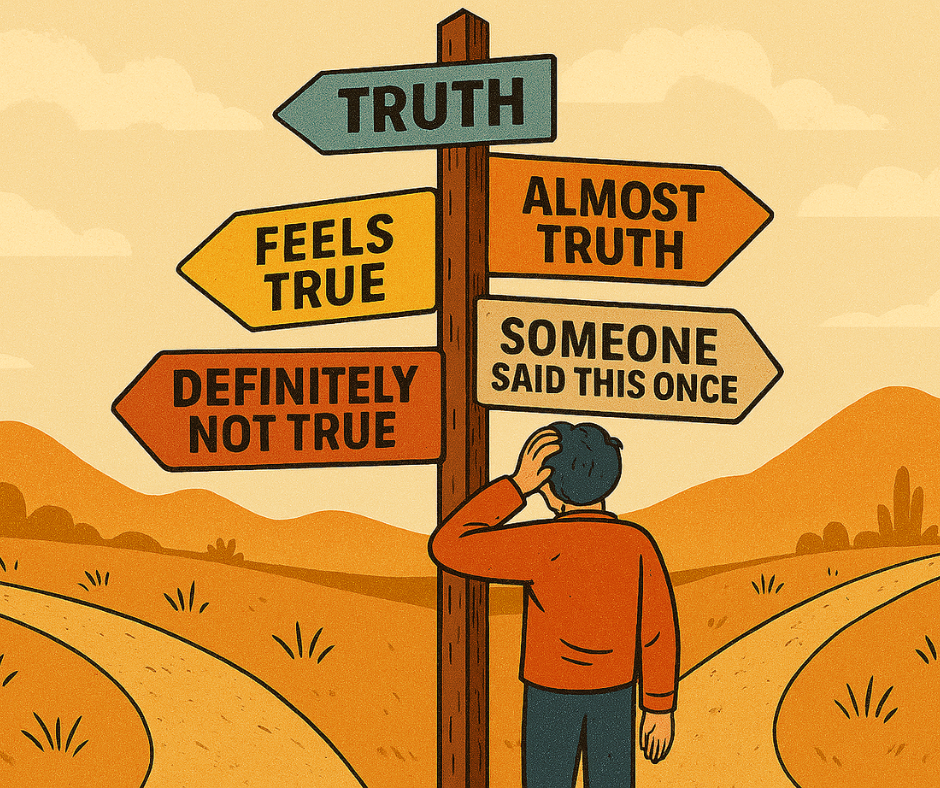
I’ve been amused lately by how easily a story can sweep through society like a rumour in a Chinese Whisper factory. Not because people are silly — far from it — but because humans are basically walking story‑magnets. If a tale has just the right emotional charge, we stick to it like Velcro.
And this is where the great double‑act begins:
Disinformation and misinformation — the Laurel and Hardy of modern chaos.
Disinformation always takes the stage first. It’s the mastermind, the scriptwriter, the one twirling the metaphorical moustache. Someone creates a lie on purpose — maybe to influence, maybe to profit, maybe just to watch the world argue.
Then misinformation bursts through the door like an enthusiastic puppy. Well‑meaning people share the story because it feels right, or dramatic, or urgent. They don’t know it’s false — they just think they’re passing along something interesting. And suddenly the whole neighbourhood is talking.
If disinformation is the match, misinformation is the wind that gleefully blows the flames into every corner of the internet.
What fascinates me is how natural this all feels. Our brains love shortcuts. If a story fits our worldview, or our fears, or our hopes, we don’t just believe it — we welcome it. I’ve caught myself doing it too, nodding along to something that “sounds about right” before I’ve even checked whether it’s remotely true.
Of course, the consequences can be… well, not so funny. History is full of moments where a carefully crafted lie, carried by well‑intentioned people, snowballed into something far more dangerous. Wars have been justified on dodgy narratives. Diseases have spread because rumours outran science. Entire populations have made decisions based on stories that were never real to begin with.
And businesses aren’t immune either. A rumour about a product can tank a brand faster than a bad review. Wild claims about miracle cures or revolutionary energy gadgets can distract people from solutions that actually work. It’s amazing how a dramatic claim — whether it’s miracle cures, secret energy devices, or windmills supposedly upsetting whales — can travel further than any fact sheet. Marine scientists have looked into it the whale story, and so far there’s no sign that wind turbines are sending whales into emotional meltdown — but the story is vivid, dramatic, and delightfully strange, which is exactly why it spreads. The more vivid the story, the faster it runs.
What really intrigues me is how normalised all this has become. Many people now treat lying by public figures or influencers as if it’s just part of the entertainment package. “Oh, they’re all lying anyway,” we say, as if dishonesty were a feature, not a bug. When lying becomes expected, it becomes invisible. And invisible things are the hardest to fight.
I’m not here to wag a finger or hand out homework. I’m more interested in the moment when each of us realises how easily a story can charm its way past our defences. Not because we’re careless — but because we’re human, and humans love a good tale.
Maybe the real mystery isn’t how to stop falsehoods entirely. I’m not offering answers — just wondering why some stories settle in so comfortably, even when they probably shouldn’t.


It's a fascinating take on the power of storytelling and how we perceive truth; in a business context, how do you reckon we can find the right balance between a compelling narrative and maintaining absolute transparency with our clients? Visit us <a href="https://jakarta.telkomuniversity.ac.id/microcontroller-dunia-teknik-langsung-jadi-nyata-hanya-dari-1-chip-kecil/">Telkom University Jakarta</a>