The Curious Case of the Magical Mark‑Up: A Cautionary Tale for Business Owners

Every town has that café—the one with the mismatched chairs, the barista who looks like he was born steaming milk, and the chalkboard menu that changes depending on who wrote it that morning.
In our town, that café was run by a lovely bloke named Graham.
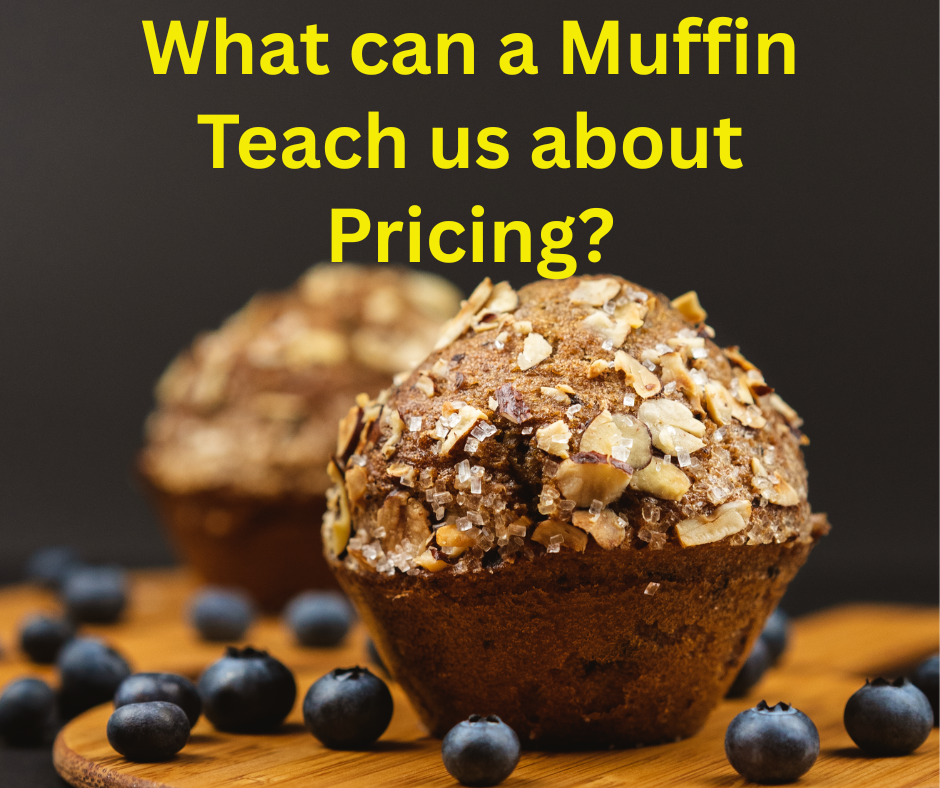
Now, Graham made a muffin that could bring a grown adult to tears. Blueberry, white chocolate, still warm in the middle. People would walk past three other cafés just to get one. They were that good.
But one Tuesday morning, as the sun rose and the tradies queued for their flat whites, Graham sat staring at his Profit & Loss report like it had personally insulted him.
“How,” he muttered, “can I sell so many muffins… and still make so little money?”
Enter Sally, his bookkeeper—equal parts spreadsheet wizard and professional truth‑teller.
She pulled up a chair, took a sip of her coffee, and asked the question that would change everything:
“Graham… how did you decide your prices?”
He shrugged. “Easy. I take the cost of ingredients, add 50% mark‑up, and boom—price done.”
Sally blinked. “Graham… that’s not how gross profit works.”
He blinked back. “Isn’t it?”
And so began the Great Muffin Maths Mystery.
Mark‑Up vs Gross Profit: The Mix‑Up That Strikes Again
Sally grabbed a napkin—because all great business revelations happen on napkins—and scribbled:
• Mark‑up is how much you add on top of your cost.
• Gross profit is the percentage of the selling price you actually keep to pay your overheads.
Two very different creatures. Like a wombat and a koala—both Australian, both adorable, but you wouldn’t want to confuse them.
Graham stared at the napkin. “So… my 50% mark‑up isn’t giving me 50% gross profit?”
“No, mate,” she said gently. “Not even close. In fact, it's only 33%”
He looked genuinely betrayed.
The Real Twist: Value Was Doing All the Heavy Lifting
But the real kicker came next.
Sally asked, “Why did you choose that price? Did you think about what customers would actually pay?”
Graham frowned. “Well… no. I just worked off my costs.”
Sally pointed to the line of customers outside—some already peering through the window, hoping the muffins weren’t sold out.
“Graham, your customers would pay more. They already tell you that every morning by lining up like it’s a concert.”
It hit him like a bag of self‑raising flour.
He had been pricing based on what the muffins cost him, not on what the muffins were worth to others.
The Moral of the Story
A week later, the muffins went up by a dollar. No riots. No protests. No angry Facebook comments.
In fact, sales went up.
Turns out, when you price based on value—not just cost—you stop leaving money on the table. And when you understand the difference between mark‑up and gross profit, your P&L stops looking like a crime scene.
Graham now sleeps better. His café thrives. And his muffins?
Still worth every cent.


Comments